Household Income Uncertainty and Pregnancy Decisions: Evidence from Temporary Work Suspensions
Authors: Gabriele Letta , Luca Salmasi , Gilberto Turati
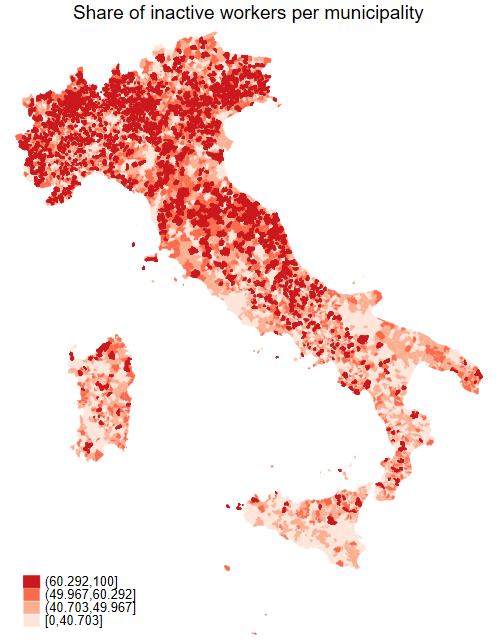
We study how uncertainty about future household income affects the decision to continue an ongoing pregnancy. To distinguish the role of uncertainty from that of realized income losses, we exploit the Italian labour-market response to the first wave of the COVID-19 pandemic. While the temporary suspension of non-essential economic activities substantially increased uncertainty about future economic prospects, workers affected by mandatory closures continued to receive income support through the national short-time work scheme. Using nationwide administrative records on voluntary pregnancy terminations and births, we combine this institutional setting with geographic variation in exposure to temporary work suspensions across municipalities. Difference-in-differences estimates show that abortion rates declined throughout Italy following the lockdown, but the decline was significantly smaller in municipalities more exposed to work suspensions. The effect is concentrated among married women, women outside the labour force, and municipalities with greater industrial employment, consistent with uncertainty affecting households whose economic prospects were more exposed to temporary work suspensions. We find no corresponding effects on births. Overall, our findings suggest that uncertainty about future household income, even in the absence of permanent job loss, can substantially affect pregnancy decisions.
Keywords: Household income uncertainty; Pregnancy decisions; Abortion; Temporary work suspensions; COVID-19.
JEL Classification: J13, I12, I18, J22.